Šta je automatizacija poslovanja i kako može unaprijediti vaš biznis?
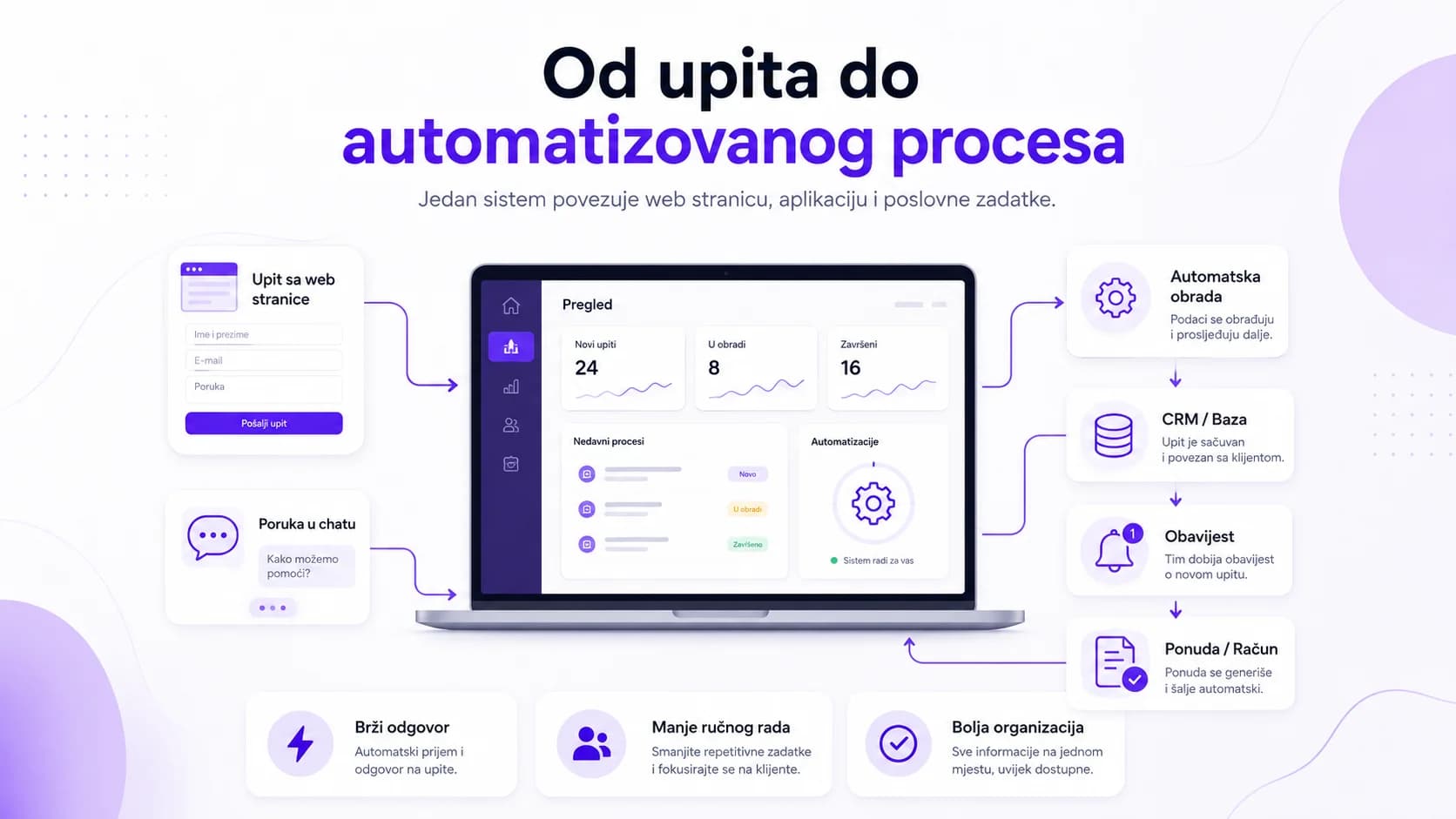
Digitalizacija poslovanja više ne podrazumijeva samo izradu moderne web-stranice. Prava vrijednost nastaje kada web-stranica, aplikacija i alati koje kompanija koristi počnu međusobno komunicirati i automatski obavljati dio svakodnevnog posla.
Upravo to nazivamo automatizacijom poslovanja.
Automatizacija omogućava da se ponavljajući zadaci izvršavaju bez stalnog ručnog rada zaposlenih. Na taj način poslovanje postaje brže, organizovanije i pouzdanije, dok zaposleni dobijaju više vremena za zadatke koji zahtijevaju ljudsku procjenu, kreativnost i direktan odnos s klijentima.
Šta je automatizacija poslovanja?
Automatizacija poslovanja predstavlja korištenje softvera, web-aplikacija i različitih integracija kako bi se određeni poslovni procesi izvršavali automatski.
To mogu biti jednostavni procesi, poput automatskog slanja email potvrde nakon ispunjavanja obrasca, ali i znatno složeniji sistemi koji povezuju prodaju, skladište, računovodstvo, dostavu i komunikaciju s klijentima.
Naprimjer, kada potencijalni klijent pošalje upit putem web-stranice, sistem može automatski:
- evidentirati njegove podatke,
- obavijestiti odgovornu osobu,
- poslati klijentu potvrdu,
- kreirati novi zadatak u CRM sistemu,
- zakazati podsjetnik za kontakt,
- pripremiti ponudu na osnovu unesenih podataka.
Bez automatizacije svaki od ovih koraka zaposlenik mora izvršiti ručno.
Koje procese biznis može automatizovati?
Gotovo svaki proces koji se redovno ponavlja može se djelimično ili potpuno automatizovati.
Obrada upita i komunikacija s klijentima
Sistem može automatski zaprimati upite s web-stranice, društvenih mreža ili drugih kanala, evidentirati ih i prosljeđivati odgovarajućem zaposleniku.
Klijent istovremeno može dobiti automatsku potvrdu da je njegov upit zaprimljen, zajedno s dodatnim informacijama ili očekivanim vremenom odgovora.
Slanje ponuda i dokumenata
Na osnovu podataka koje je klijent dostavio moguće je automatski generisati ponudu, predračun, ugovor ili drugi dokument.
Time se ubrzava prodajni proces i smanjuje mogućnost grešaka pri ručnom unosu podataka.
Zakazivanje termina
Saloni, ordinacije, servisi, konsultanti i druge uslužne djelatnosti mogu koristiti sistem za online rezervaciju termina.
Nakon rezervacije klijent može automatski dobiti potvrdu i podsjetnik, dok se termin istovremeno evidentira u kalendaru zaposlenika.
Fakture i naplata
Automatizovani sistem može kreirati račune, slati ih klijentima, pratiti status plaćanja i slati podsjetnike za neizmirene obaveze.
Može se povezati i s računovodstvenim ili drugim poslovnim softverom.
Upravljanje narudžbama i zalihama
Kod web-shopova automatizacija može povezati narudžbe, stanje na skladištu, dostavnu službu i obavijesti kupcima.
Kada kupac izvrši narudžbu, sistem može automatski smanjiti stanje proizvoda, pripremiti podatke za dostavu i poslati kupcu informacije o statusu narudžbe.
Izvještaji i analiza poslovanja
Umjesto ručnog prikupljanja podataka, sistem može automatski kreirati dnevne, sedmične ili mjesečne izvještaje.
Vlasnik ili menadžer tako može pratiti prodaju, broj upita, realizovane poslove, troškove i druge važne pokazatelje na jednom mjestu.
Koje su prednosti automatizacije?
Najveća prednost automatizacije jeste ušteda vremena, ali njeni efekti su znatno širi.
Manje ručnog rada
Zaposleni više ne moraju svakodnevno ponavljati iste administrativne zadatke. Sistem ih izvršava automatski, prema unaprijed definisanim pravilima.
Manje grešaka
Ručni unos podataka često dovodi do pogrešno upisanih brojeva, adresa, cijena ili datuma. Automatizacija smanjuje mogućnost takvih propusta.
Brži odgovor klijentima
Klijenti očekuju brz odgovor. Automatizovani sistem može reagovati odmah, čak i izvan radnog vremena.
Bolja organizacija
Svi podaci, zadaci i aktivnosti mogu biti evidentirani na jednom mjestu. Time se smanjuje mogućnost da upit, obaveza ili važan dokument budu zaboravljeni.
Lakše širenje poslovanja
Kako broj klijenata raste, povećava se i količina administrativnog posla. Automatizacija omogućava da biznis obradi veći broj upita i narudžbi bez proporcionalnog povećanja broja zaposlenih.
Da li automatizacija znači zamjenu zaposlenih?
Cilj automatizacije nije da zamijeni ljude, nego da ih oslobodi poslova koji ne zahtijevaju njihovu stručnost.
Zaposlenik ne bi trebao trošiti sate na kopiranje podataka iz jednog sistema u drugi, ručno slanje istih poruka ili kreiranje gotovo identičnih dokumenata.
Te zadatke može izvršavati sistem, dok se zaposleni mogu posvetiti prodaji, razvoju usluge, komunikaciji s klijentima i donošenju važnih odluka.
Kako izgleda proces automatizacije?
Svako poslovanje ima drugačije procese, zbog čega automatizacija ne treba biti univerzalno rješenje koje se primjenjuje bez analize.
Proces najčešće počinje identifikovanjem zadataka koji zaposlenima oduzimaju najviše vremena.
Nakon toga se definiše:
- koji koraci se mogu automatizovati,
- koje alate biznis već koristi,
- koje sisteme je potrebno povezati,
- gdje je i dalje potrebna ljudska kontrola,
- kakav rezultat automatizacija treba postići.
Na osnovu toga može se razviti prilagođena web-aplikacija, administrativni panel, CRM sistem ili integracija postojećih alata.
Primjer automatizovanog procesa
Zamislimo kompaniju koja putem web-stranice prima zahtjeve za ponudu.
Bez automatizacije proces može izgledati ovako:
Klijent pošalje upit, zaposlenik ručno kopira podatke, obavještava kolegu, priprema ponudu, šalje email i postavlja podsjetnik za ponovni kontakt.
Uz automatizaciju proces izgleda drugačije:
Klijent ispuni obrazac → podaci se evidentiraju → sistem dodjeljuje upit zaposleniku → klijentu stiže potvrda → automatski se kreira ponuda → postavlja se podsjetnik za daljnji kontakt.
Proces koji je ranije zahtijevao više ručnih koraka sada se obavlja za nekoliko sekundi.
Web-stranica više nije dovoljna
Moderna web-stranica je važna, ali sama po sebi često nije dovoljna da unaprijedi poslovanje.
Stranica treba biti povezana s procesima koji se odvijaju nakon što posjetilac pošalje upit, rezerviše termin ili izvrši narudžbu.
Zbog toga se sve više kompanija okreće razvoju sistema koji ne služe samo za predstavljanje firme, nego aktivno učestvuju u prodaji, komunikaciji i organizaciji poslovanja.
Automatizacija prilagođena vašem poslovanju
U Digitaltu razvijamo web-stranice, web-aplikacije i automatizovane sisteme prilagođene stvarnim procesima kompanije.
Možemo povezati postojeće alate, automatizovati ponavljajuće zadatke ili razviti potpuno novo rješenje koje objedinjuje vaše poslovanje na jednom mjestu.
Ne izrađujemo samo web-stranice. Gradimo digitalne sisteme koji rade za vaš biznis.