AI automatizacija poslovanja: Kako automatizovati procese u firmi
Umjetna inteligencija više nije tehnologija rezervisana samo za velike kompanije i tehnološke gigante. AI alati danas su dostupni malim i srednjim firmama i mogu značajno promijeniti način na koji se obavljaju svakodnevni poslovni zadaci.
Od automatskog odgovaranja na upite kupaca i obrade dokumenata do generisanja ponuda, analize podataka i automatizacije prodaje – AI automatizacija poslovanja omogućava kompanijama da rade brže, efikasnije i sa manje ručnog rada.
Za mnoge firme najveći problem nije nedostatak posla, već vrijeme koje zaposleni svakodnevno troše na ponavljajuće zadatke koji se mogu automatizovati.
Upravo tu AI automatizacija može napraviti najveću razliku.
Šta je AI automatizacija poslovanja?
AI automatizacija poslovanja predstavlja korištenje umjetne inteligencije i softverskih sistema kako bi se određeni poslovni procesi izvršavali automatski, uz minimalnu ili nikakvu intervenciju zaposlenih.
Klasična automatizacija uglavnom funkcioniše prema unaprijed definisanim pravilima.
Na primjer:
Ako kupac ispuni kontakt formu → pošalji email obavijest prodajnom timu.
AI automatizacija može otići znatno dalje.
Sistem može analizirati poruku kupca, prepoznati šta kupac traži, kategorizovati upit, pripremiti odgovor, evidentirati potencijalnog klijenta u CRM sistem i obavijestiti odgovarajućeg zaposlenika.
Drugim riječima, AI ne automatizuje samo izvršavanje zadataka već može pomoći i u razumijevanju informacija i donošenju jednostavnijih poslovnih odluka.
Zašto firme sve više koriste AI automatizaciju?
U gotovo svakoj kompaniji postoje zadaci koji se svakodnevno ponavljaju.
To mogu biti:
- odgovaranje na iste ili slične upite kupaca
- unošenje podataka
- izrada ponuda
- obrada narudžbi
- slanje email poruka
- priprema izvještaja
- zakazivanje sastanaka
- unos potencijalnih klijenata u CRM
- provjera dokumenata
- praćenje prodajnih aktivnosti.
Kada zaposleni veliki dio radnog dana troše na takve aktivnosti, manje vremena ostaje za prodaju, razvoj proizvoda, komunikaciju sa važnim klijentima i druge zadatke koji direktno doprinose rastu firme.
Cilj AI automatizacije nije samo zamijeniti određeni ručni zadatak.
Pravi cilj je napraviti efikasniji poslovni sistem.
Koje procese u firmi možete automatizovati?
Gotovo svaki odjel kompanije može imati koristi od automatizacije.
1. Automatizacija korisničke podrške
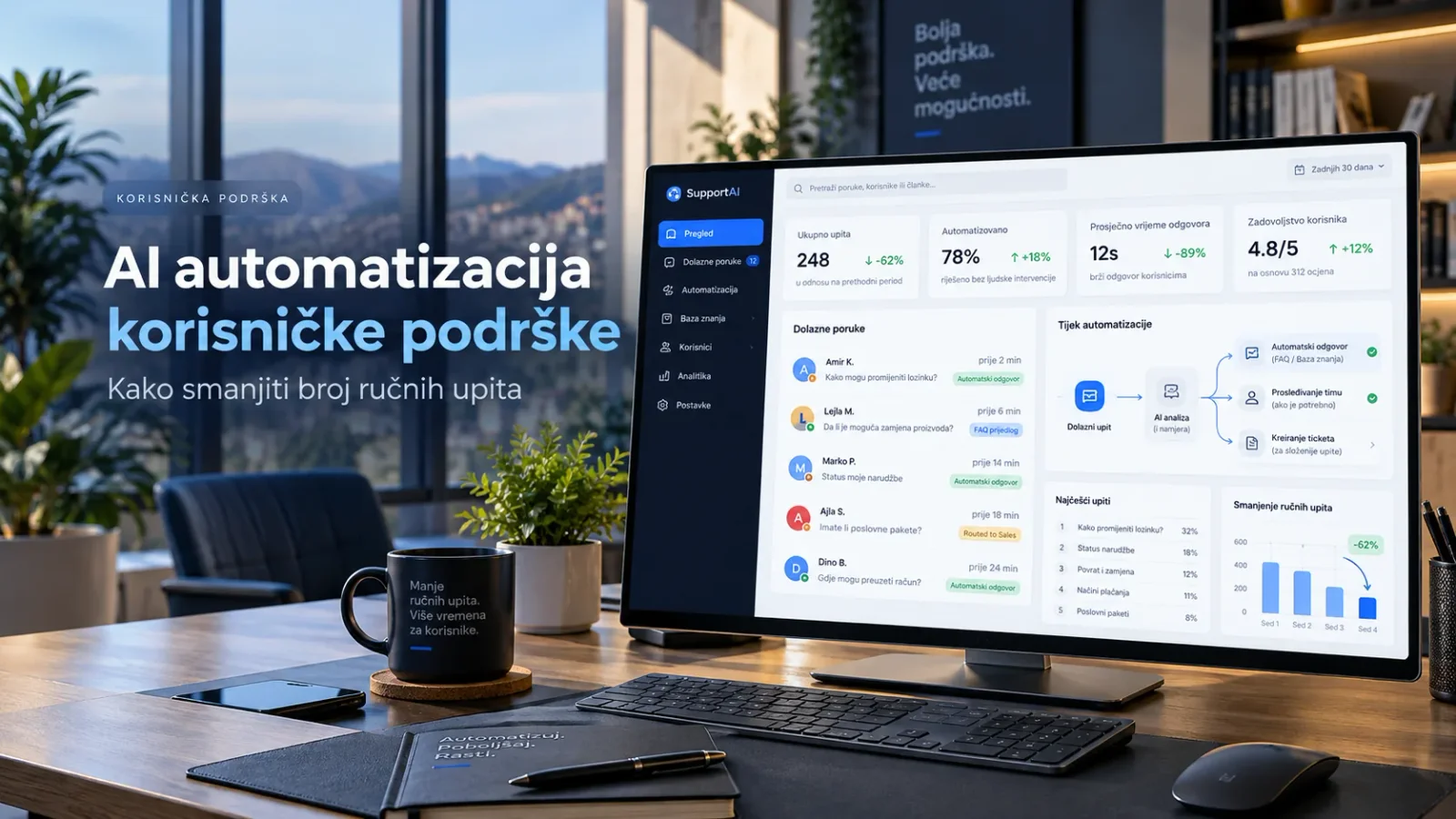
Jedna od najčešćih primjena umjetne inteligencije je automatizacija komunikacije sa korisnicima.
AI chatbot ili virtualni asistent može odgovarati na često postavljana pitanja, pružiti informacije o proizvodima i uslugama, pomoći kupcu da pronađe odgovarajući proizvod ili prikupiti podatke prije nego što razgovor preuzme zaposlenik.
Na primjer, korisnik može pitati:
„Koliko košta izrada web shopa?“
AI sistem može prikupiti informacije o broju proizvoda, potrebnim načinima plaćanja, dostavi i dodatnim funkcijama te nakon toga proslijediti kvalitetnije strukturiran upit prodajnom timu.
Na ovaj način firma može brže odgovarati korisnicima čak i izvan standardnog radnog vremena.
2. Automatizacija prodaje
Prodajni proces često uključuje veliki broj administrativnih zadataka.
AI i automatizacija mogu pomoći kod:
- evidentiranja novih potencijalnih klijenata
- kategorizacije upita
- automatskog slanja informacija
- podsjetnika za kontaktiranje klijenta
- kreiranja prodajnih ponuda
- praćenja statusa potencijalnog kupca
- analize prodajnih podataka.
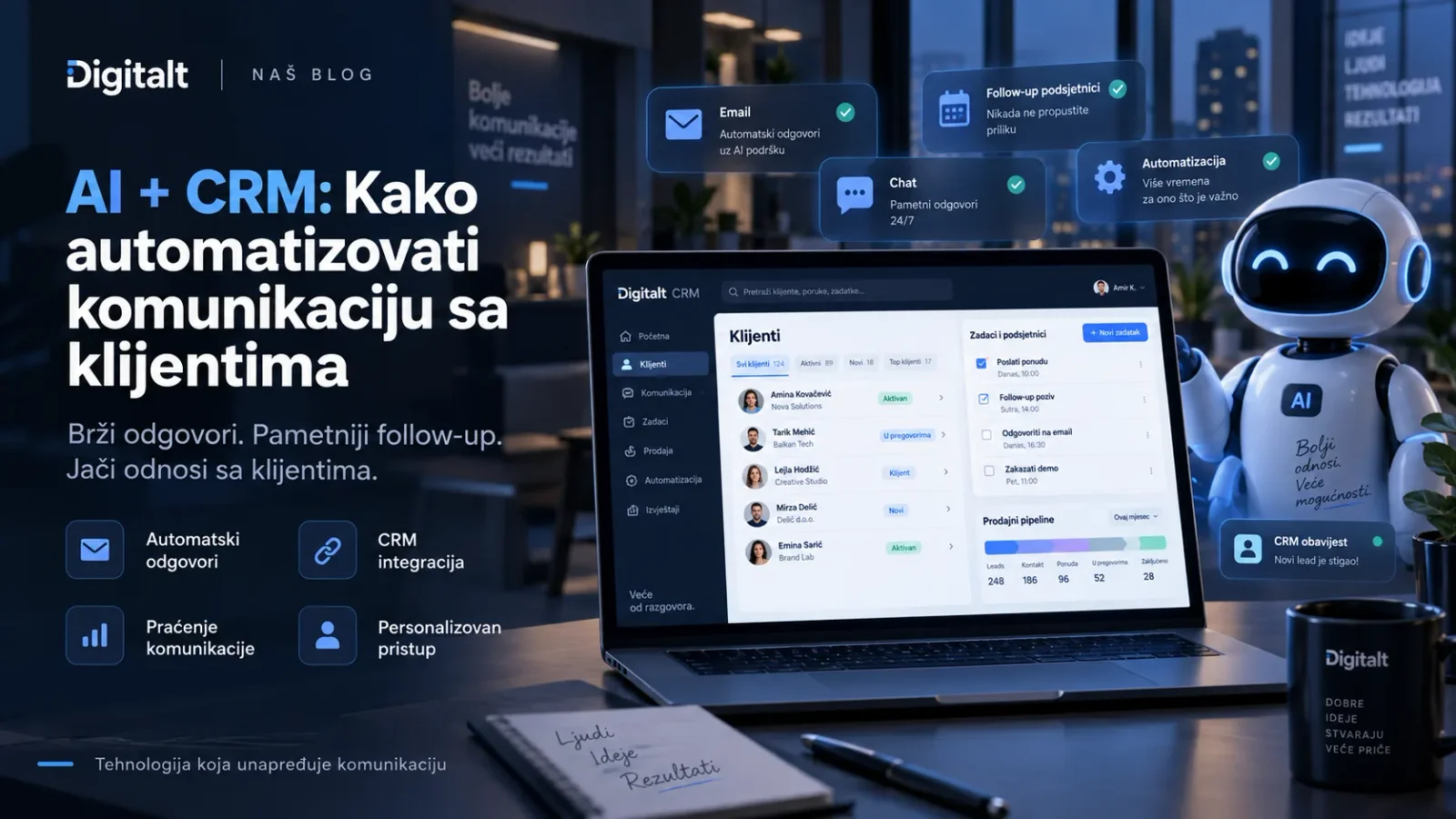
Na primjer, nakon što potencijalni klijent pošalje upit putem web stranice, sistem može automatski kreirati novi kontakt u CRM-u, evidentirati njegov zahtjev i obavijestiti prodajnog predstavnika.
Time se smanjuje mogućnost da kvalitetan potencijalni klijent ostane bez odgovora.
3. Automatska izrada ponuda
Kompanije koje svakodnevno izrađuju veliki broj ponuda mogu značajno ubrzati taj proces.
Umjesto ručnog kopiranja podataka u dokument, moguće je napraviti sistem koji automatski generiše ponudu na osnovu podataka iz CRM-a, kontakt forme ili internog sistema.
AI može dodatno pomoći kod kreiranja opisa usluga, strukturiranja ponude ili prilagođavanja sadržaja zahtjevima konkretnog klijenta.
Gotov dokument zatim može automatski biti poslan klijentu ili dostavljen zaposleniku na provjeru.
4. Automatizacija email komunikacije
Email je i dalje jedan od glavnih poslovnih komunikacijskih kanala, ali njegovo svakodnevno upravljanje može oduzimati mnogo vremena.
AI sistemi mogu pomoći da se dolazne poruke automatski:
- analiziraju
- kategorizuju
- proslijede odgovarajućoj osobi
- označe prema prioritetu
- pretvore u zadatak
- pripremi nacrt odgovora.
Primjer može biti servisna kompanija koja svakodnevno prima desetine zahtjeva korisnika.
AI može analizirati sadržaj emaila i automatski odrediti da li se radi o tehničkoj podršci, prodajnom upitu, reklamaciji ili nekoj drugoj vrsti zahtjeva.
5. Automatizacija web shopa
Web shopovi nude veliki broj mogućnosti za automatizaciju.
Moguće je automatizovati procese poput:
- potvrde narudžbe
- slanja statusa narudžbe
- generisanja računa
- ažuriranja zaliha
- obavještavanja kupaca
- povezivanja sa dostavnim službama
- slanja podataka računovodstvu
- preporuke proizvoda
- podsjetnika za napuštenu korpu.
Dobro povezan web shop može automatski komunicirati sa različitim poslovnim sistemima i značajno smanjiti količinu ručnog rada.
6. Automatizacija dokumenata
Veliki broj kompanija svakodnevno obrađuje PDF dokumente, račune, ugovore, narudžbenice i druge poslovne dokumente.
AI može pomoći u prepoznavanju i izvlačenju važnih podataka iz dokumenata.
Na primjer, sistem može iz primljenog računa automatski prepoznati:
- naziv kompanije
- broj računa
- datum
- iznos
- PDV
- rok plaćanja.
Podaci zatim mogu biti proslijeđeni računovodstvenom ili ERP sistemu bez potrebe za ručnim unosom.
7. Automatizacija marketinga
Marketing uključuje veliki broj aktivnosti koje se mogu djelimično automatizovati.
AI može pomoći kod kreiranja prijedloga sadržaja, personalizacije email kampanja, analize rezultata kampanja, segmentacije korisnika i pripreme sadržaja za društvene mreže.
Važno je, međutim, da kvalitetna marketing strategija ne bude potpuno prepuštena automatizaciji.
AI treba koristiti kao alat koji ubrzava rad, dok završnu kontrolu sadržaja i strategije treba zadržati čovjek.
8. Automatizacija internih poslovnih procesa
AI automatizacija ne mora biti usmjerena samo prema kupcima.
Veliki potencijal nalazi se upravo u internim procesima kompanije.
Na primjer, zaposlenik može poslati zahtjev za godišnji odmor kroz interni sistem.
Sistem automatski provjerava dostupne dane, šalje zahtjev nadređenom, evidentira odobrenje i ažurira interni kalendar.
Slični sistemi mogu se koristiti za:
- interne zahtjeve
- evidenciju radnog vremena
- odobravanje dokumenata
- upravljanje zadacima
- onboarding novih zaposlenika
- internu bazu znanja.
Kako izgleda AI automatizacija u praksi?
Zamislimo kompaniju koja putem svoje web stranice svakodnevno prima veliki broj upita.
Bez automatizacije proces može izgledati ovako:
Kupac šalje upit → zaposlenik otvara email → analizira zahtjev → ručno unosi podatke u CRM → kontaktira kupca → priprema ponudu → šalje ponudu.
Sa automatizacijom proces može izgledati drugačije:
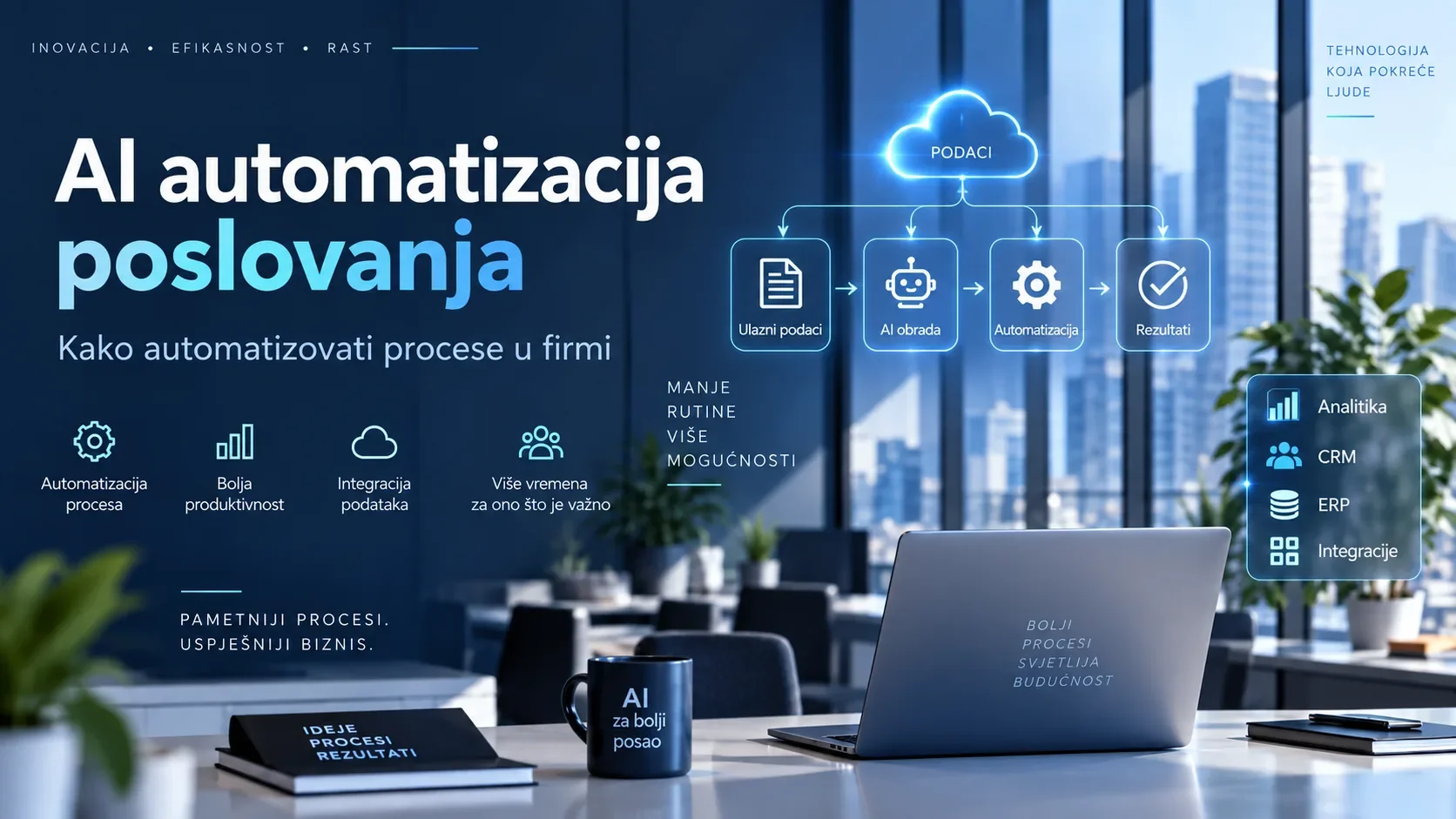
Kupac šalje upit → AI analizira sadržaj → podaci se automatski unose u CRM → upit se kategorizuje → odgovarajući zaposlenik dobija obavijest → sistem priprema nacrt odgovora ili ponude.
Zaposlenik se uključuje tamo gdje je zaista potreban.
Upravo to predstavlja jednu od najvećih vrijednosti poslovne automatizacije.
AI automatizacija ne znači da sve treba prepustiti umjetnoj inteligenciji
Jedna od najvećih grešaka prilikom uvođenja AI sistema jeste pokušaj da se odmah automatizuje kompletno poslovanje.
To obično nije najbolji pristup.
Prvo treba analizirati postojeće poslovne procese i pronaći zadatke koji:
- često se ponavljaju
- oduzimaju mnogo vremena
- imaju jasno definisana pravila
- uključuju velike količine podataka
- često uzrokuju greške pri ručnom radu.
Nakon toga automatizacija se može uvoditi postepeno.
Kod važnih poslovnih odluka, finansijskih procesa, ugovora ili osjetljive komunikacije poželjno je zadržati ljudsku provjeru prije konačne akcije.
Kako započeti automatizaciju poslovanja?
Prvi korak nije izbor AI alata.
Prvi korak je analiza poslovnog procesa.
Potrebno je odgovoriti na nekoliko pitanja:
Koji zadaci oduzimaju najviše vremena zaposlenima?
Koji zadaci se najčešće ponavljaju?
Gdje najčešće dolazi do grešaka?
Koje informacije zaposleni stalno kopiraju iz jednog sistema u drugi?
Koje aktivnosti usporavaju prodaju ili komunikaciju sa kupcima?
Odgovori na ova pitanja vrlo brzo mogu pokazati gdje automatizacija može donijeti najveću korist.
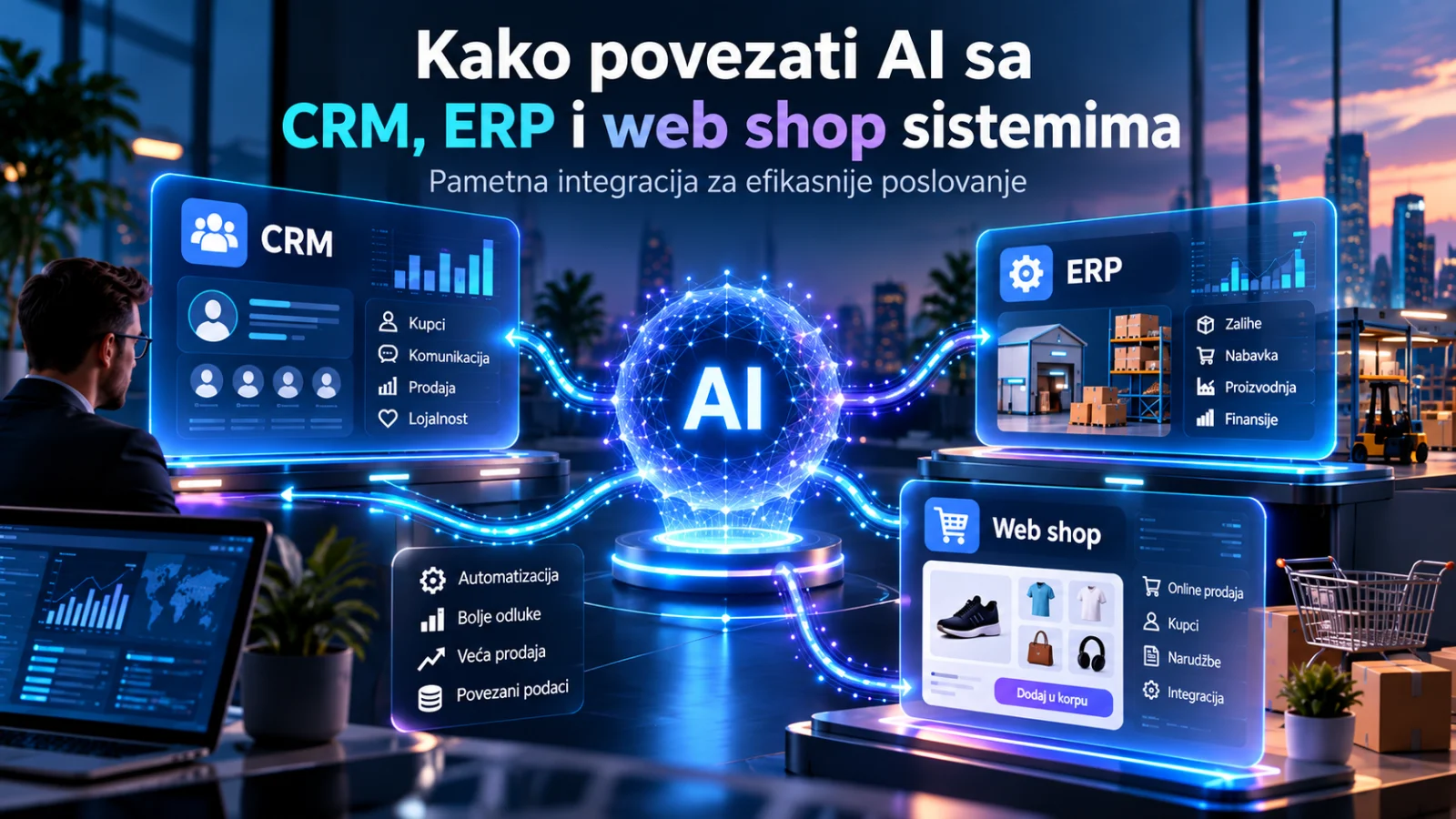
Integracija postojećih sistema
Dobra poslovna automatizacija najčešće ne zahtijeva zamjenu svih postojećih sistema.
Umjesto toga, cilj je povezati postojeće alate.
To mogu biti:
- web stranica
- web shop
- CRM
- ERP
- računovodstveni program
- sistemi za skladište
- sistemi za dostavu
- interne aplikacije
- AI servisi.
Kada sistemi međusobno razmjenjuju podatke, veliki broj poslovnih zadataka može se izvršavati automatski.
Gotovi AI alati ili razvoj vlastitog rješenja?
Za jednostavnije potrebe često je dovoljno koristiti postojeće AI i automation platforme.
Međutim, kompleksniji poslovni procesi često zahtijevaju razvoj prilagođenog sistema.
Custom AI rješenje može biti povezano direktno sa postojećim web stranicama, web shopovima, internim aplikacijama, bazama podataka, CRM ili ERP sistemima.
Prednost takvog pristupa jeste što se automatizacija prilagođava načinu na koji kompanija zaista posluje, umjesto da se poslovanje prilagođava ograničenjima određenog alata.
Koliko košta AI automatizacija poslovanja?
Ne postoji univerzalna cijena.
Trošak zavisi od složenosti procesa, broja sistema koje je potrebno povezati, količine podataka, potrebnih AI funkcija i toga da li se koriste postojeći alati ili razvija potpuno prilagođeno rješenje.
Jednostavna automatizacija jednog procesa može biti relativno brzo implementirana.
Kompleksan sistem koji povezuje web shop, CRM, ERP, skladište, računovodstvo i AI može zahtijevati znatno ozbiljniji razvoj.
Zbog toga je prije izrade najbolje napraviti analizu procesa i procijeniti gdje automatizacija može donijeti najveći povrat investicije.
Koje su najveće prednosti AI automatizacije?
Dobro implementirana automatizacija može donijeti nekoliko važnih prednosti.
Manje ručnog rada
Zaposleni ne moraju trošiti vrijeme na zadatke koje softver može izvršiti automatski.
Brži poslovni procesi
Aktivnosti koje su ranije zahtijevale nekoliko sati ili čak dana mogu biti završene znatno brže.
Manje grešaka
Automatski prijenos i obrada podataka smanjuju mogućnost grešaka koje nastaju prilikom ručnog unosa.
Bolje korisničko iskustvo
Kupci mogu brže dobiti informacije, potvrde i odgovore.
Veća produktivnost
Zaposleni se mogu fokusirati na aktivnosti koje zahtijevaju iskustvo, kreativnost, komunikaciju i donošenje odluka.
Lakše skaliranje poslovanja
Kada broj kupaca ili narudžbi raste, automatizovani sistemi mogu preuzeti dio dodatnog opterećenja bez proporcionalnog povećanja administrativnog rada.
Da li je AI automatizacija namijenjena samo velikim kompanijama?
Ne.
U mnogim slučajevima upravo mala i srednja preduzeća mogu imati značajnu korist od automatizacije.
Firma sa pet ili deset zaposlenih često nema poseban tim za svaki poslovni proces.
Ako automatizacija jednom zaposleniku uštedi nekoliko sati sedmično, taj efekat na manju kompaniju može biti vrlo značajan.
Najbolji pristup jeste početi sa jednim procesom koji stvara najveće usko grlo i zatim postepeno proširivati automatizaciju.
Budućnost poslovanja je kombinacija ljudi, softvera i umjetne inteligencije
AI neće preko noći zamijeniti sve postojeće poslovne procese.
Ali način na koji kompanije obavljaju administrativne, prodajne i operativne zadatke već se mijenja.
Kompanije koje na vrijeme prepoznaju procese pogodne za automatizaciju mogu smanjiti troškove, ubrzati rad i pružiti bolje iskustvo svojim kupcima.
Najvažnije pitanje zato više nije:
„Da li trebamo koristiti umjetnu inteligenciju?“
Mnogo korisnije pitanje je:
„Koji dio našeg poslovanja danas možemo učiniti bržim i efikasnijim uz pomoć automatizacije?“
Želite automatizovati procese u svojoj firmi?
Svaka kompanija ima drugačije poslovne procese, zbog čega kvalitetna automatizacija počinje analizom stvarnih potreba.
Moguće je povezati web stranice, web shopove, interne aplikacije, CRM sisteme, baze podataka i AI tehnologije u jedinstven automatizovani sistem prilagođen vašem poslovanju.
Ako svakodnevno gubite vrijeme na ponavljanje istih zadataka, ručni unos podataka, obradu velikog broja upita ili prebacivanje informacija između različitih programa, vrlo je vjerovatno da dio tog procesa može biti automatizovan.