
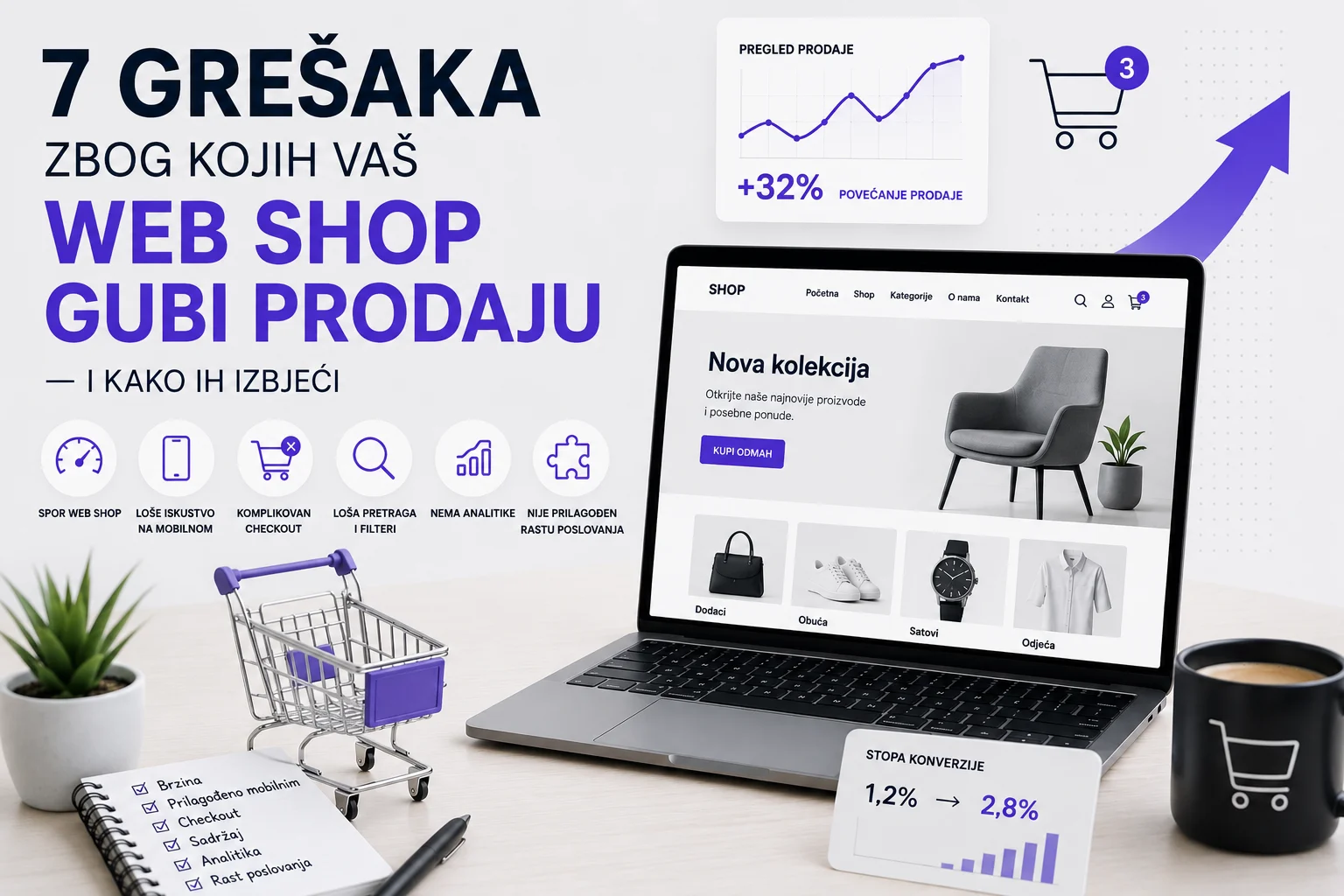
7 grešaka zbog kojih web shop gubi prodaju – i kako ih izbjeći
Internet prodaja više nije samo dodatni kanal poslovanja. Za veliki broj kompanija web shop je postao jedan od glavnih prodajnih kanala.
Međutim, sama činjenica da imate web shop ne znači automatski da će kupci završavati svoje narudžbe.
Možete imati kvalitetne proizvode, odlične cijene i stotine posjetilaca dnevno, ali ako korisničko iskustvo nije dobro optimizovano, veliki dio potencijalnih kupaca napustit će stranicu prije nego što izvrši kupovinu.
U nastavku izdvajamo 7 čestih grešaka zbog kojih web shopovi gube prodaju i objašnjavamo kako ih možete izbjeći.
1. Web shop se učitava presporo
Brzina stranice jedan je od najvažnijih faktora korisničkog iskustva.
Kupac koji mora čekati nekoliko sekundi da se otvori kategorija, proizvod ili korpa vrlo lako će jednostavno napustiti web shop i otići konkurenciji.
Problem često nastaje zbog:
- prevelikih fotografija proizvoda
- loše optimizovanog koda
- velikog broja nepotrebnih skripti
- sporog servera ili hostinga
- nedostatka cache sistema
- nepravilno optimizovane baze podataka
Moderan web shop mora biti dizajniran tako da se ključni sadržaj prikazuje praktično trenutno.
Kako riješiti problem?
Potrebno je optimizovati slike, kod, baze podataka i serversku infrastrukturu, ali i redovno pratiti performanse kroz alate za analizu brzine.
Kod većih web shopova posebno je važno da infrastruktura može podnijeti povećan broj posjetilaca tokom promocija, sezonskih akcija ili marketinških kampanja.
2. Mobilna verzija web shopa nije dovoljno dobra
Veliki dio online kupovine danas počinje upravo na mobilnom telefonu.
Zbog toga nije dovoljno da web shop samo „radi“ na telefonu.
Mobilno iskustvo mora biti jednostavno, brzo i prilagođeno korisniku.
Posebnu pažnju treba posvetiti:
- navigaciji
- filterima
- pretrazi proizvoda
- veličini dugmadi
- prikazu fotografija
- korpi
- checkout procesu
Ako kupac mora zumirati ekran, tražiti dugme za dodavanje proizvoda u korpu ili prolaziti kroz komplikovane menije, šansa da će odustati značajno raste.
Mobile-first pristup više nije opcija – postao je standard modernog e-commerce razvoja.
3. Checkout proces je previše komplikovan
Kupac je pronašao proizvod.
Dodao ga je u korpu.
I onda odustao.
Jedan od najčešćih razloga je upravo komplikovan checkout.
Traženje previše podataka, obavezna registracija korisnika ili veliki broj koraka mogu nepotrebno otežati završetak kupovine.
Dobar checkout treba biti:
- jednostavan
- pregledan
- brz
- prilagođen mobilnim uređajima
- transparentan kada su u pitanju dostava i ukupni troškovi
Kupcu bi od početka trebalo biti jasno koliko plaća proizvod, koliko košta dostava i koje načine plaćanja može koristiti.
Što je manje nepotrebnih prepreka između proizvoda i potvrde narudžbe, veća je vjerovatnoća konverzije.
4. Loše fotografije i nedovoljno informacija o proizvodu
U fizičkoj prodavnici kupac može uzeti proizvod u ruke, pregledati ga i postaviti pitanje prodavaču.
Kod online kupovine tu ulogu preuzima stranica proizvoda.
Zato fotografije i opis proizvoda imaju veliki uticaj na odluku o kupovini.
Dobra stranica proizvoda treba sadržavati:
- kvalitetne fotografije iz više uglova
- jasan naziv proizvoda
- cijenu
- dostupnost
- karakteristike proizvoda
- veličine ili varijacije
- informacije o dostavi
- povezane proizvode
Opis proizvoda ne treba biti samo tehnička specifikacija.
Potrebno je kupcu objasniti zašto je proizvod koristan i zašto ga vrijedi kupiti.
Kvalitetni opisi dodatno pomažu i SEO optimizaciji jer omogućavaju Googleu da bolje razumije sadržaj svake stranice proizvoda.
5. Loša pretraga i filteri
Ako web shop ima nekoliko stotina ili nekoliko hiljada artikala, kvalitetna pretraga postaje ključna.
Kupac koji tačno zna šta želi ne želi pregledati deset kategorija da bi pronašao određeni proizvod.
Dobra pretraga treba omogućiti pronalazak proizvoda prema nazivu, kategoriji, brendu ili drugim relevantnim karakteristikama.
Filteri dodatno omogućavaju kupcu da brzo suzi izbor prema:
- cijeni
- veličini
- brendu
- kategoriji
- dostupnosti
- boji
- drugim karakteristikama proizvoda
Što kupac brže pronađe ono što traži, veća je vjerovatnoća da će završiti kupovinu.
6. Web shop nema kvalitetnu analitiku
Jedna od najvećih grešaka je donositi odluke bez podataka.
Ako ne znate kako se korisnici ponašaju na vašem web shopu, teško možete znati šta treba poboljšati.
Potrebno je pratiti podatke kao što su:
- broj posjetilaca
- izvori posjeta
- najposjećeniji proizvodi
- dodavanja u korpu
- napuštene korpe
- završene kupovine
- stopa konverzije
- prosječna vrijednost narudžbe
Na primjer, ako određeni proizvod ima hiljade pregleda, ali gotovo nikakvu prodaju, problem možda nije u marketingu.
Problem može biti cijena, opis, fotografije, dostupnost ili korisničko iskustvo.
Kvalitetna analitika omogućava da odluke donosite na osnovu stvarnih podataka, a ne pretpostavki.
7. Web shop nije prilagođen rastu poslovanja
Web shop sa 100 proizvoda možda može raditi odlično danas.
Ali šta se dešava kada katalog naraste na 5.000 proizvoda?
Šta kada je potrebno povezati:
- skladište
- ERP
- fiskalizaciju
- dostavne službe
- loyalty program
- mobilnu aplikaciju
- eksterni marketplace
- automatsku sinhronizaciju cijena i zaliha?
Upravo zbog toga ozbiljan e-commerce projekat treba planirati dugoročno.
Arhitektura sistema mora omogućiti nove integracije i funkcionalnosti bez potrebe da se cijeli web shop ponovo razvija nakon nekoliko godina.
Web shop treba biti prodajni sistem, a ne samo katalog proizvoda
Moderni web shop više nije obična internet stranica sa proizvodima i dugmetom „Dodaj u korpu“.
To je kompletan digitalni prodajni sistem koji povezuje marketing, proizvode, korisnike, narudžbe, analitiku, skladište i poslovne procese.
Najuspješniji web shopovi kontinuirano analiziraju ponašanje kupaca i poboljšavaju korisničko iskustvo.
Čak i male optimizacije mogu napraviti veliku razliku.
Brži web shop, jednostavnija kupovina ili kvalitetnija pretraga mogu povećati konverziju bez potrebe da povećavate budžet za oglase.
Razvijate novi web shop ili želite unaprijediti postojeći?
U Digitaltu razvijamo moderna web shop i e-commerce rješenja prilagođena konkretnim poslovnim procesima.
Fokus nije samo na dizajnu, već na kompletnom sistemu – od korisničkog iskustva i CMS administracije do analitike, performansi i integracija sa drugim servisima.
Ako postojeći web shop ograničava vaše poslovanje ili planirate potpuno novo e-commerce rješenje, pravi trenutak za optimizaciju je prije nego što problemi počnu usporavati rast.